




The Benefits of Investing in Premium Door Hardware

Door hardware is the part of a renovation budget people consistently underspend on. The reasoning is intuitive enough: handles are small, walls are large, and given a fixed budget, putting money into the things you see most seems sensible.
The problem is that you do see hardware constantly, more often than the wallpaper or the paint colour, and you also touch it. Hardware is the part of a finished room you have a tactile relationship with every day, and the difference between budget and premium is one your hands learn within a week.
That alone would make the case for spending properly. The financial argument, the longevity argument, and the resale argument all push in the same direction.
How Does Premium Hardware Differ From Budget Options?
The differences are structural rather than cosmetic.
Base Materials
Premium hardware uses solid brass, quality stainless steel, or bronze as the base material. Budget hardware uses die-cast zinc alloy with plated finishes. The first ages gracefully; the second corrodes from the inside.
Internal Mechanisms
Internal mechanisms in premium hardware use dual return springs, hardened steel spindles, machined bushings, and components designed to be serviceable. Budget mechanisms use single springs, soft steel spindles, plastic bushings, and components riveted in place.
Finishes
Finishes on premium hardware are either inherent to the base metal (polished brass, satin steel) or applied through processes like PVD coating that bond at a molecular level. Budget finishes are typically electroplated, often in thicknesses measured in microns, and wear through within a few years of normal grip contact.
Weight As A Tell
The weight difference tells you most of what you need to know. Pick up a premium handle and a budget one in the same nominal style; the premium will weigh roughly twice as much, and that mass is doing structural work.
What Does Premium Hardware Actually Cost?
Realistic figures for the UK market: a quality solid brass internal door handle costs between £40 and £120 per door, including the latch and any associated escutcheons. High-end designer hardware can run to £200 or more per door for individual statement pieces.
Budget Range For Comparison
Budget hardware ranges from £8 to £25 per door for the cheapest options, climbing to £30 or £40 for marginally better die-cast zinc.
Total Spend Across A Home
Across a typical UK home with 10 to 15 internal doors, the cost difference between budget and premium runs to somewhere between £400 and £1,500 for the entire house. Spread across the 20-50 year lifespan of quality hardware, the actual annual cost is negligible.
The relevant comparison is not premium versus budget; it is premium once versus budget two or three times. Cheap hardware fails predictably and gets replaced, often along with the surrounding paintwork that gets damaged in the process.
How Does Premium Hardware Affect Daily Use?

This is the benefit people underestimate until they experience it.
How A Quality Handle Operates
A quality handle returns to horizontal with a definite snap. The lever has the right amount of resistance: not stiff, not loose, and the same on day 1,000 as on day one. The latch retracts cleanly without grinding. The door closes with a reassuring action rather than a rattle.
These are small interactions, but you have them dozens of times a day. The cumulative effect of every internal door operating smoothly is genuine, even if it is hard to articulate when comparing two handles in a showroom.
How Cheap Hardware Deteriorates
Cheap hardware develops a characteristic deterioration: levers droop slightly, handles need to be lifted to release the latch, finishes wear unevenly, screws loosen.
None of these failures is dramatic in isolation; collectively they make a house feel slightly tired even when everything else is in good condition.
The psychological effect of hardware that works properly is part of what people respond to in well-finished homes without being able to identify why.
Does Premium Hardware Add Property Value?
Yes, though the mechanism is more subtle than direct return on investment.
Buyer Perception
Buyers viewing a property notice quality details unconsciously. Hardware that feels solid, consistent finishes across rooms, and the absence of obvious cheapness all contribute to the impression that the house has been looked after.
The opposite is also true: budget hardware on every door signals a renovation that cut corners, which makes buyers wonder what other corners were cut.
Return On Investment
Estate agents and home stagers consistently identify hardware as one of the highest-impact upgrades for properties going to market, in part because the cost is modest relative to the perceived improvement. A £600 hardware upgrade across a house can affect offers by considerably more than £600.
At The Higher End Of The Market
Premium hardware is essentially expected rather than impressive. Its absence is what gets noticed; its presence is the baseline. Trying to sell a £1.5 million house with budget zinc handles communicates the wrong thing about how the property has been finished.
The principle that interior detailing affects valuation is well established, and the strategies to increase property value through interior design almost always include hardware as one of the highest-leverage changes available.
What About Security?
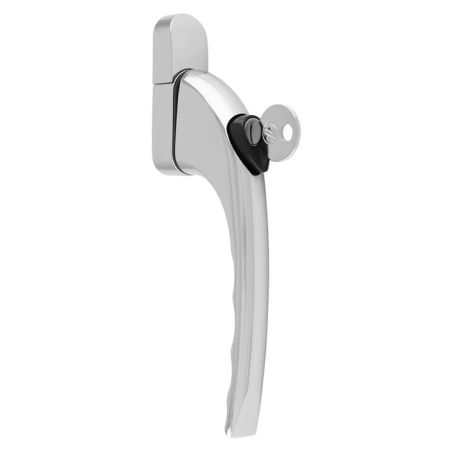
The security argument is specific to external doors and to internal doors with locks. Premium lockable hardware uses better cylinder mechanisms, stronger latch bolts, and more resistant strike plates than budget equivalents.
External Doors
The difference matters considerably here. A budget lock cylinder can be defeated in under a minute by anyone with basic picking knowledge or an electric pick gun; a quality cylinder rated to BS 3621 or equivalent resists picking, drilling, and bumping for substantially longer.
Internal Doors
The lockable hardware question is more about reliability than about defeating intruders. A bathroom or bedroom door with a quality privacy lock will operate consistently for decades; a budget equivalent develops issues within years and frequently leaves people stuck on the wrong side of a door at inconvenient moments.
For specifying lockable internal hardware that combines proper security with consistent operation, our secure door handle collection at Brass Works includes options with concealed fixings, hardened mechanisms, and the kind of internal engineering that prevents the failures budget locks suffer from.
When Is Premium Hardware Genuinely Worth It?
Primary Residences
For a home you intend to stay in for years, the answer is essentially always. The cost is modest relative to the rest of the renovation, the benefits compound over time, and the alternative involves replacing failed hardware repeatedly.
Properties Going To Market
For a property being sold within a year or two, the calculation depends on the price bracket. At the higher end, premium hardware is part of meeting buyer expectations. At the lower end, the upgrade may not pay back directly but still costs little enough that it rarely loses money.
Buy-To-Let
The case is mixed. Tenants use hardware harder than owners, which favours durability, but landlords also face the temptation of furnishing to a price. The middle ground (quality stainless or mid-grade brass rather than top-tier) often makes sense in this context. The hardware on your doors is not where you want to discover that you saved £400 to spend £1,200 down the line.