




Why Do Door Handles Droop? 5 Common Causes and How to Fix Them

You push down on the lever, the door opens, and the handle stays where you left it. Or it sags slowly back to a slightly tilted position, never quite returning to horizontal. Or it sits in a permanent mid-droop, neither up nor properly down, doing its job adequately but looking wrong every time you walk past.
When it comes to knowing how to fix common door handle problems, drooping handles can be quite tricky - and they are also one of the most consistently misdiagnosed.
The droop itself is rarely the actual problem. It is a symptom, and the cause is usually one of five things, all of which have specific fixes that take less time than complaining about the handle.
1. Worn Or Broken Return Springs
The internal mechanism inside the handle's rose contains one or more springs whose job is to push the lever back to horizontal after you release it. Over years of operation, these springs lose their tension, and eventually one of them snaps entirely.
A handle with one functioning spring out of two will droop slightly; a handle with no functioning springs will droop fully.
How To Diagnose Spring Failure
You can usually identify spring failure by feel. A handle with healthy springs returns smartly to horizontal with a definite snap. A handle with weak springs returns slowly or only partially. A handle with broken springs feels loose and floppy when operated.
How To Fix It
The fix depends on the handle. Quality handles allow the spring cassette to be replaced; you remove the rose, lift out the worn cassette, and fit a new one.
Budget handles often have the springs riveted in place, in which case the whole handle needs replacing. Spring kits are available from most specialist ironmongers for a few pounds and the swap takes around 15 minutes.
2. Loose Grub Screws
The grub screw is the small set screw on the underside of the lever that locks it to the spindle running through the door. When this screw works loose, the lever rotates slightly on the spindle each time it is operated, settling into whatever position has the least resistance. That position is usually slightly below horizontal.
How To Diagnose
Check by trying to wiggle the lever vertically without pressing it. If you can move it up and down by a few degrees independently of the latch mechanism, the grub screw needs tightening.
How To Fix It
Use the correct size of allen key (typically 2mm or 2.5mm for British handles), apply a drop of medium-strength threadlocker, and tighten firmly but not aggressively.
Over-tightening can strip the thread or distort the spindle hole, which creates a more expensive problem than the one you started with. Recheck six months later, since vibration loosens these gradually.
3. A Misaligned Latch
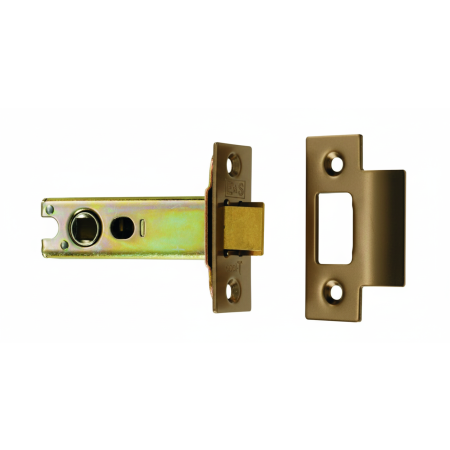
When the latch tongue does not line up properly with the strike plate on the door frame, the handle has to fight against friction every time the door is opened or closed. Over time, this fatigue affects both the springs and the spindle, leading to drooping that springs alone cannot account for.
How To Diagnose
Check alignment by closing the door slowly and watching the latch enter the strike plate. It should pass through cleanly without rubbing or catching. If you can see the tongue scraping the strike plate as it enters, the alignment is off.
What Causes It
Causes vary. The hinges may have settled, dropping the door slightly. The frame may have shifted with seasonal movement. The strike plate may have been fitted incorrectly originally.
How To Fix It
The fix is usually adjusting the strike plate position by elongating its mounting holes with a needle file, or in more serious cases packing the hinges with thin shims. A door that has dropped more than 3mm or 4mm typically needs the hinges addressed properly rather than worked around.
4. A Worn Or Bent Spindle

The spindle is the square steel rod connecting the handle on one side of the door to the handle on the other, passing through the latch mechanism. In quality hardware this is hardened steel, dimensionally stable, and lasts indefinitely.
In budget hardware it is often soft steel that gradually deforms under repeated torque, particularly at the corners where the lever attaches.
How To Diagnose
A worn spindle creates slop in the connection between lever and latch, allowing the handle to rotate slightly without operating the latch. The visual result is droop; the practical result is a handle that increasingly fails to retract the latch on the first attempt.
Diagnosis requires removing the handles from both sides of the door and inspecting the spindle. If the corners are visibly rounded, replace it.
How To Fix It
Spindles are inexpensive, available in standard 8mm sizes, and swapping one takes around 20 minutes including refitting the handles.
5. The Latch Mechanism Itself Is Failing
Sometimes the handle is fine but the latch inside the door is the actual problem. A latch with a worn or damaged internal spring will not return cleanly when the handle is released, and the handle in turn cannot return to horizontal because the latch is preventing it from doing so.
How To Diagnose
Test by removing the handles from both sides and operating the latch directly with a screwdriver in the spindle hole. If the latch tongue moves stiffly, sticks, or fails to spring back, the latch is the issue, not the handle.
How To Fix It
Replacement latches are inexpensive and available in standard sizes. Measure the backset (the distance from the door edge to the centre of the spindle hole) and the case dimensions before buying. Fitting takes around 30 minutes and addresses the root cause rather than the symptom.
When Should You Replace The Handle Entirely?
Most drooping handles can be repaired. Replacement makes sense when the handle is genuinely budget hardware whose internal mechanism is not designed to be serviced, when the lever itself has cracked at the spindle hole, or when the finish has degraded to a point where you would not want to keep it even if it worked perfectly.
A useful rule: if the handle is solid brass or quality stainless steel, repair it. If it is die-cast zinc with worn plating, replace it with something better, since you are likely to be facing the same droop in another five years if you fit like-for-like.
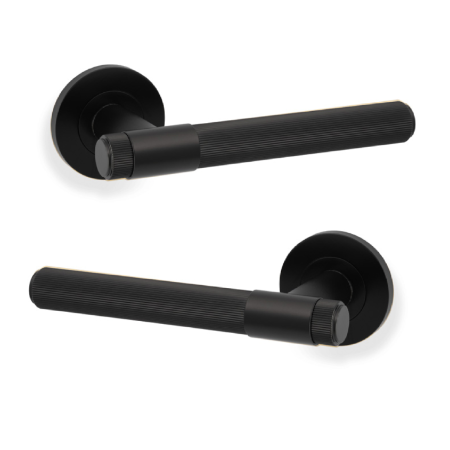
If the handle deserves replacing rather than repairing, our high-quality door handle fittings built around solid brass and serviceable internal mechanisms remove the drooping problem at its source by simply not being made the way the failing handle was made.