




Mohammed Patel
-
- April 11, 2026
Door hardware is the part of a renovation budget people consistently underspend on. The reasoning is intuitive enough: handles are small, walls are large, and given a fixed budget, putting money into the things you see most seems sensible.
The problem is that you do see hardware constantly, more often than the wallpaper or the paint colour, and you also touch it. Hardware is the part of a finished room you have a tactile relationship with every day, and the difference between budget and premium is one your hands learn within a week.
That alone would make the case for spending properly. The financial argument, the longevity argument, and the resale argument all push in the same direction.
How Does Premium Hardware Differ From Budget Options?
The differences are structural rather than cosmetic.
Base Materials
Premium hardware uses solid brass, quality stainless steel, or bronze as the base material. Budget hardware uses die-cast zinc alloy with plated finishes. The first ages gracefully;
-
- April 09, 2026
The brass-versus-chrome question is mostly a question about era. Chrome is the finish of late twentieth-century minimalism, the default specification for new-build flats and rental refurbishments since the 1990s.
Brass is older and newer at once: traditional in the heritage sense, but also the dominant choice in current high-end residential design after a decade of brass dominating interiors magazines.
Choosing between them is not really about which is better in some absolute sense. It is about which one belongs in your home, given the architecture you have, the look you want, and the kind of life the hardware will be living.
What Are The Practical Differences?
Brass and chrome behave differently in almost every respect.
Material Versus Plating
Brass is a base metal in its own right. The handle itself is brass, with finishes applied or developed on its surface. Chrome is a plating, typically nickel-chrome over a base metal that may be brass, steel, or zinc alloy.
The implication is that
-
- April 07, 2026
The material a door handle is made from determines almost everything else about it: how it feels in the hand, how it ages over years of use, how it photographs in a finished room, and whether you will still want it on your door in 2040.
Most homeowners choose handles based on appearance and discover the material implications later. The reverse approach makes more sense, since material decisions you make now show up daily for the next few decades.
What follows is a working guide to the materials that actually matter, what each does well, and where each falls short.
What Are The Main Materials Used For Door Handles?
Five materials cover almost all quality handles on the market: solid brass, stainless steel, bronze, aluminium, and zinc alloy. Each has structural and aesthetic properties that suit it to specific applications.
Solid Brass
The traditional choice for British residential hardware and the benchmark by which others are measured. It is dense, dimensionally stable, naturally corrosion-resistant,
-
- April 05, 2026
Stiffness in a door handle starts gradually. The lever needs slightly more pressure than it used to. The return feels sluggish. There is a faint resistance halfway through the travel that was not there last year.
You compensate without thinking about it, pressing harder, until one day the handle stops cooperating entirely and you realise you have been working around the problem for months.
The good news is that almost all stiff handles can be fixed in under an hour with basic tools. The cause is usually one of four things, and each has a specific intervention. Diagnosis is the harder part; once you know what is actually causing the stiffness, the fix is mechanical and straightforward.
What Causes A Door Handle To Become Stiff?
Friction, in one form or another. The handle's job is to translate a small downward push of the lever into the linear movement of the latch tongue, and any friction added to that mechanical chain shows up as stiffness at the lever.
Dirt And Old Lubricant
Dirt and
-
- April 03, 2026
You push down on the lever, the door opens, and the handle stays where you left it. Or it sags slowly back to a slightly tilted position, never quite returning to horizontal. Or it sits in a permanent mid-droop, neither up nor properly down, doing its job adequately but looking wrong every time you walk past.
When it comes to knowing how to fix common door handle problems, drooping handles can be quite tricky - and they are also one of the most consistently misdiagnosed.
The droop itself is rarely the actual problem. It is a symptom, and the cause is usually one of five things, all of which have specific fixes that take less time than complaining about the handle.
1. Worn Or Broken Return Springs
The internal mechanism inside the handle's rose contains one or more springs whose job is to push the lever back to horizontal after you release it. Over years of operation, these springs lose their tension, and eventually one of them snaps entirely.
A handle with one functioning spring out
-
- April 01, 2026
A good door handle should outlive the door it sits on. That sentence is worth pausing on, because most people assume hardware is a consumable, replaced every decade or so when it starts looking tired or working badly.
Walk through any Georgian townhouse or Edwardian terrace and you will find original brass handles still operating smoothly two centuries after they were installed. The lifespan was never the problem. The problem is what we have been buying for the past fifty years.
The honest answer is that a door handle's life expectancy depends almost entirely on what it is made of, how often it gets used, and whether it was designed to be repaired or replaced. Get those three factors right and you are looking at decades of trouble-free operation. Get them wrong and you may be replacing handles every five to ten years.
What Is The Realistic Lifespan Of A Door Handle?
A solid brass handle of decent quality, fitted properly and used in normal residential conditions, should give you 50 to 100
-
- March 18, 2026
A door handle is often viewed through the lens of aesthetics - a finishing touch that complements a room's decor - but its primary function is far more utilitarian. In the hierarchy of home design, the handle is the critical interface for both security and accessibility. It is the gatekeeper of your privacy and the primary tool for movement within the home. In 2026, the convergence of smart technology and inclusive design has redefined what we expect from our ironmongery. A handle must now be as easy for a five-year-old or an elderly resident to use as it is difficult for an intruder to bypass.
For homeowners and developers, the challenge lies in balancing these two often-competing requirements. A high-security handle can sometimes be cumbersome and difficult to operate for those with limited dexterity, while an ultra-accessible "easy-open" lever might lack the structural robustness needed for an external entry point. Achieving a truly "intelligent" home means selecting hardware that addresses
-
- March 15, 2026
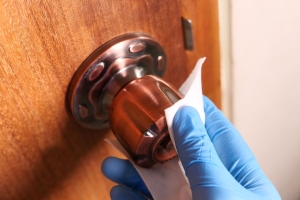
Brass has long been the darling of British architecture, prized for its golden warmth and its ability to age with a certain dignified grace. Yet, because brass is an alloy of copper and zinc, it is chemically reactive. Left to its own devices, it will oxidise, developing a dark, mottled film known as tarnish. In 2026, the resurgence of "living finishes" in interior design has made the care of brass a primary concern for homeowners who want to maintain that high-end, editorial look. Cleaning brass is not a matter of aggressive scrubbing; it is a delicate balancing act between chemistry and elbow grease.
The first rule of brass maintenance is identifying exactly what kind of brass you are holding. Modern manufacturing typically offers two distinct varieties: lacquered and unlacquered. A lacquered handle is coated in a clear, protective "envelope" of tough plastic or resin to prevent oxygen from reaching the metal. Unlacquered brass is "raw," designed to change and darken over time. Treating
-
- March 10, 2026
In the world of interior hardware, the difference between a mediocre product and a superior one is rarely visible at a cursory glance. Most door handles, regardless of price, look reasonably polished when they are first taken out of the box. The true test of quality occurs six months later, when the internal springs begin to lose their tension, or two years later, when the finish starts to pit and peel. A high-quality door handle is an exercise in invisible engineering - it is defined by the weight of its base metal, the precision of its internal tolerances, and the durability of its molecular coating.
For homeowners and developers in 2026, the shift toward "quiet luxury" has made the tactile experience of a home more important than ever. We are moving away from disposable, lightweight alloys and returning to the substantial feel of solid-forged metals. If you have ever felt the hollow, "tinny" click of a budget handle and compared it to the dampened, silent operation of a premium lever,
-
- March 07, 2026
Selecting ironmongery for a renovation often feels like learning a new language. Terms like "backplate," "rose," and "escutcheon" are thrown around, leaving many homeowners wondering why a simple lever has so many variations. In reality, the type of handle you choose dictates not only the aesthetic of the room but also the mechanical preparation required for the door itself. From the classic circular knob to the modern privacy lever, each silhouette serves a specific functional purpose and architectural style.
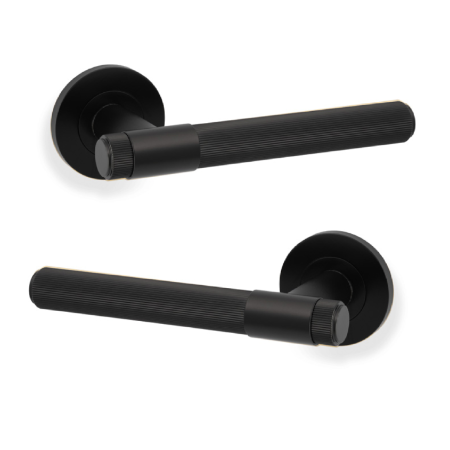
In 2026, the trend is moving toward highly tactile and specialized hardware. We are no longer settling for the generic "builder grade" handles that used to dominate the market. Instead, there is a renewed interest in how the shape of a handle interacts with the hand and the eye. Whether you are looking for the sleekness of matte black door hardware designs or the weight of a traditional brass knob, understanding the eight primary types of door handles is the first step in a successful