




What Makes A High-Quality Door Handle?

In the world of interior hardware, the difference between a mediocre product and a superior one is rarely visible at a cursory glance. Most door handles, regardless of price, look reasonably polished when they are first taken out of the box. The true test of quality occurs six months later, when the internal springs begin to lose their tension, or two years later, when the finish starts to pit and peel. A high-quality door handle is an exercise in invisible engineering - it is defined by the weight of its base metal, the precision of its internal tolerances, and the durability of its molecular coating.
For homeowners and developers in 2026, the shift toward "quiet luxury" has made the tactile experience of a home more important than ever. We are moving away from disposable, lightweight alloys and returning to the substantial feel of solid-forged metals. If you have ever felt the hollow, "tinny" click of a budget handle and compared it to the dampened, silent operation of a premium lever, you have experienced the fundamental difference in manufacturing standards. Quality in ironmongery is not an aesthetic choice; it is a structural one.
The Importance Of The Base Metal
The most significant indicator of quality is the material hidden beneath the surface finish. Budget handles are typically made from "Zamak" - a zinc alloy that is cheap to pressure-die-cast into complex shapes. While functional in the short term, Zamak is lightweight and brittle. If the plating fails, the underlying zinc will corrode into a white, powdery substance. It simply lacks the "heft" that most people associate with luxury hardware.
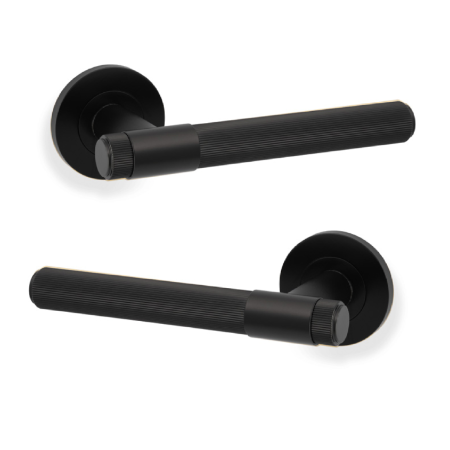
A high-quality handle is almost always made from solid brass or stainless steel. Solid brass is a dense, non-ferrous metal that provides a reassuring weight in the hand and a naturally smooth surface for plating or lacquering. If you’re looking for contemporary black finish door fittings, ensuring the base metal is solid brass is essential. Black finishes on zinc often flake off over time, whereas on brass, they bond much more effectively. Learning how to tell if a door handle is solid brass is also a vital skill for any renovator; a simple magnet test or a check of the item’s weight will usually reveal the truth.
Precision Engineering And Internal Springs
The "feel" of a handle is dictated by its internal spring mechanism. In a low-quality handle, the spring is often a simple, thin wire that provides inconsistent tension. This leads to the dreaded "sagging handle" syndrome, where the lever fails to return to a horizontal position. It creates a sloppy, unkempt look for the entire door and can eventually lead to the latch failing to catch properly.
Premium handles utilise a heavy-duty, "double-sprung" mechanism. This means there is a dedicated spring in the handle itself that works in tandem with the spring in the door latch. The result is a crisp, snappy return that feels the same on the ten-thousandth use as it did on the first. Furthermore, high-quality handles feature "nylon washers" or bearings between the moving parts. This prevents metal-on-metal friction, ensuring the rotation is silent and smooth rather than grinding or squeaky.
The Science Of Advanced Surface Finishes
In 2026, the technology behind metal finishing has reached a pinnacle with PVD (Physical Vapour Deposition). Traditional electroplating involves dipping the metal in a chemical bath to add a thin layer of gold or chrome. While beautiful, it can be scratched. PVD, however, is a vacuum coating process that bonds the finish to the metal at a molecular level. It is the same technology used on high-end watches and surgical instruments.
A PVD finish is virtually indestructible - it is resistant to salt air, UV light, and the oils from human skin. If you are choosing hardware for a bathroom or a coastal property, a PVD-treated handle is the only way to guarantee the finish won't tarnish. For more traditional "living" finishes, quality is found in the depth of the aging process. A hand-burnished brass handle will have a rich, multi-tonal patina that a machine-sprayed "antique" finish can never replicate.
Ergonomics And The User Experience

A high-quality handle is designed with the human hand in mind. This sounds obvious, but many budget designs prioritise ease of manufacturing over ergonomics. A well-designed lever will have softened edges on the underside where your fingers wrap around it, and the length will be calibrated to provide maximum leverage with minimum effort.
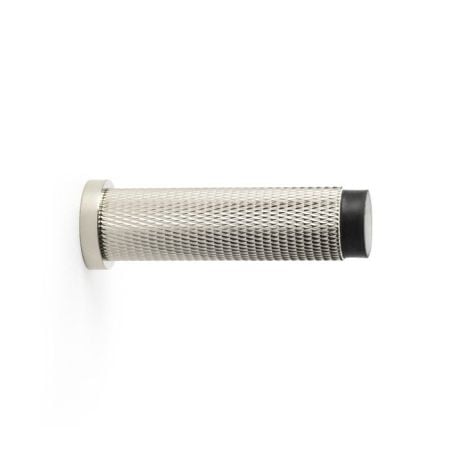
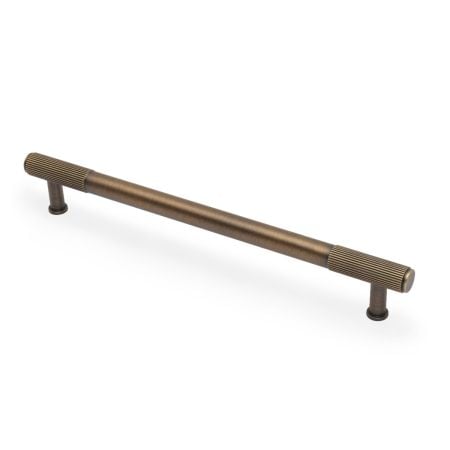
The "knurling" or texture on a handle is another area where quality is evident. On a premium handle, the diamond-cut pattern is sharp, consistent, and provides a genuine grip. On a cheaper version, the texture is often "rolled" onto the metal, resulting in a blurred, slippery surface that feels more like plastic than metal. The tactile feedback of a well-machined piece of hardware is a small but constant reminder of the quality of the home.
Consistency In Manufacturing Tolerances
When you buy ten handles for a hallway, you expect them to be identical. With mass-produced, low-quality ironmongery, the "tolerances" are often quite wide. You might find that one lever has slightly more "play" or wobble than the next, or that the screw holes are misaligned by a millimetre. These small discrepancies make installation a nightmare for joiners and lead to a finish that looks slightly "off" to the naked eye.
High-quality brands use CNC (Computer Numerical Control) machining to ensure that every component is identical to within a fraction of a millimetre. This precision means the spindle fits perfectly into the follower without rattling, and the rose or backplate sits perfectly flush against the door. This level of accuracy is what allows a handle to function silently for decades.
Why Fixing Methods Matter
How a handle attaches to the door is a tell-tale sign of its quality. Cheap handles rely solely on small "wood screws" that bite into the timber. Over time, as the handle is pulled and pushed, these screws can pull out of the wood, causing the handle to become loose.
Quality hardware utilizes "bolt-through" fixings. These are long bolts that pass entirely through the door and the latch, screwing into the handle on the opposite side. This creates a "sandwich" effect that is incredibly strong and prevents the hardware from ever pulling away from the door face. If you see a handle that only uses surface screws, it is a clear indication that it wasn't designed for long-term durability.
Investing In Functional Art
Ultimately, a door handle is the only part of your architecture that you touch every single day. While a high-quality handle may cost three or four times more than a budget alternative, the cost per "touch" over its thirty-year lifespan is negligible. It is one of the few areas of home improvement where the correlation between price and performance is absolute.
By choosing solid materials, precision engineering, and advanced finishes, you are ensuring that your home feels substantial and well-crafted. In an era of disposable goods, there is a profound satisfaction in hardware that is built to last a lifetime. It is the finishing touch that elevates a house from a simple building to a curated home.