




Do It Yourself
-
- April 11, 2026
Door hardware is the part of a renovation budget people consistently underspend on. The reasoning is intuitive enough: handles are small, walls are large, and given a fixed budget, putting money into the things you see most seems sensible.
The problem is that you do see hardware constantly, more often than the wallpaper or the paint colour, and you also touch it. Hardware is the part of a finished room you have a tactile relationship with every day, and the difference between budget and premium is one your hands learn within a week.
That alone would make the case for spending properly. The financial argument, the longevity argument, and the resale argument all push in the same direction.
How Does Premium Hardware Differ From Budget Options?
The differences are structural rather than cosmetic.
Base Materials
Premium hardware uses solid brass, quality stainless steel, or bronze as the base material. Budget hardware uses die-cast zinc alloy with plated finishes. The first ages gracefully;
-
- April 05, 2026
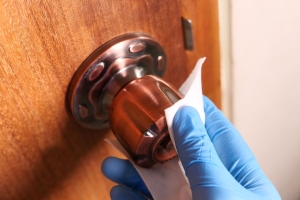
Stiffness in a door handle starts gradually. The lever needs slightly more pressure than it used to. The return feels sluggish. There is a faint resistance halfway through the travel that was not there last year.
You compensate without thinking about it, pressing harder, until one day the handle stops cooperating entirely and you realise you have been working around the problem for months.
The good news is that almost all stiff handles can be fixed in under an hour with basic tools. The cause is usually one of four things, and each has a specific intervention. Diagnosis is the harder part; once you know what is actually causing the stiffness, the fix is mechanical and straightforward.
What Causes A Door Handle To Become Stiff?
Friction, in one form or another. The handle's job is to translate a small downward push of the lever into the linear movement of the latch tongue, and any friction added to that mechanical chain shows up as stiffness at the lever.
Dirt And Old Lubricant
Dirt and
-
- March 15, 2026
Brass has long been the darling of British architecture, prized for its golden warmth and its ability to age with a certain dignified grace. Yet, because brass is an alloy of copper and zinc, it is chemically reactive. Left to its own devices, it will oxidise, developing a dark, mottled film known as tarnish. In 2026, the resurgence of "living finishes" in interior design has made the care of brass a primary concern for homeowners who want to maintain that high-end, editorial look. Cleaning brass is not a matter of aggressive scrubbing; it is a delicate balancing act between chemistry and elbow grease.
The first rule of brass maintenance is identifying exactly what kind of brass you are holding. Modern manufacturing typically offers two distinct varieties: lacquered and unlacquered. A lacquered handle is coated in a clear, protective "envelope" of tough plastic or resin to prevent oxygen from reaching the metal. Unlacquered brass is "raw," designed to change and darken over time. Treating
-
- March 04, 2026
The mechanical simplicity of a door handle is perhaps the most overlooked triumph of domestic engineering. We interact with these devices dozens of times a day, usually without a second thought, yet the physics and ergonomics required to make that interaction feel effortless are remarkably complex. From the tactile resistance of the spring to the silent glide of the latch bolt, every movement is a calculated response to human force. In 2026, as we move toward increasingly automated homes, the traditional manual handle remains the gold standard for reliability and intuitive design.
A door handle is essentially a lever that converts rotational force into linear motion. When you depress a lever or turn a knob, you’re engaging a spindle that retracts a spring-loaded latch from the strike plate in the door frame. It is a sequence of events that must happen in milliseconds, with enough resistance to feel substantial but not so much that it becomes a barrier to entry. For homeowners and designers,
-
- March 01, 2026
Interior design is frequently discussed in terms of sweeping gestures - the velvet sofa, the bespoke cabinetry, or the heritage paint palette. Yet, the true character of a home is often articulated in its smallest details. Door hardware is the first physical point of contact anyone has with a room; it’s a tactile introduction that sets expectations for the space beyond. If your home were a person, the door handles would be the handshake. A flimsy, mismatched handle suggests a lack of attention to detail, while a heavy, well-chosen piece of ironmongery signals quality and intent.
Matching your hardware to your home’s personality isn't merely about historical accuracy. It’s about creating a cohesive narrative that flows from the front door to the back of the house. In 2026, we’re seeing a move away from "safe" generic choices toward premium architectural door handle designs that serve as functional sculpture. Whether you’re restoring a Georgian townhouse or finishing a brutalist new-build,
-
- February 12, 2026
If you're designing or updating interiors, you've probably encountered the tension between creating beautiful spaces and ensuring they actually work for daily life. A stunning room that's uncomfortable to use fails functionally. A highly functional space that looks terrible fails aesthetically. The challenge is achieving both simultaneously rather than sacrificing one for the other.
This balance isn't about compromise where both aspects suffer. It's about understanding that the best design solutions serve both purposes - beautiful rooms should also be comfortable, practical spaces should also be attractive, and functionality itself can be elegant when properly considered.
Understanding True Functionality
Beyond Surface Practicality
If you're thinking about functionality purely as "does it work," you're missing half the picture. True functionality includes physical comfort, psychological comfort, appropriate storage, good lighting, suitable acoustics, and spaces that support how you actually
-
- February 10, 2026
If you're living with dated interior doors - flat hollow-core slabs from the 1980s, damaged Victorian panels that have seen better days, or builder-grade basics that came with the property - you've probably considered replacement. Then you've seen the costs involved, the disruption of removing and refitting doors throughout a home, and the reality that perfectly functional doors don't justify complete replacement just because they're not beautiful.
The good news is that door replacement isn't your only option for transforming how interior doors look and feel. If you're willing to invest some time and modest budget into creative updates, you can achieve dramatic improvement without the expense and disruption of full replacement.
Add Moulding or Trim Details
Creating Architectural Interest
If you're working with plain flat doors that lack character, adding moulding creates depth and architectural detail that transforms their appearance entirely. Simple rectangular panels created with picture
-
- February 05, 2026
If you're planning to sell eventually - or even if you're not but want to protect your investment - certain interior design choices add tangible value whilst others merely reflect personal taste without moving the financial needle. Understanding the difference helps you make decisions that serve both your current enjoyment and future resale prospects.
This isn't about designing purely for hypothetical future buyers at the expense of living in a home you actually like. It's about recognising which improvements deliver financial return and which are purely personal investments, allowing you to allocate budget strategically between the two.
Focus on Kitchens and Bathrooms First
Where Buyers Notice Most
If you're working with limited budget for improvements, kitchens and bathrooms deliver the strongest return. These rooms heavily influence buyer decisions and valuations, whilst bedrooms and living areas matter less to ultimate property value despite being where you spend most time.
Quality
-
- February 03, 2026
Major renovations get all the attention - knocking down walls, new kitchens, complete bathroom refits - but some of the most effective improvements to how your home looks and feels come from smaller changes that don't require contractors, significant budgets, or weeks of disruption. Never underestimate small upgrades that elevate your interiors without breaking the bank!
And these aren't minor tweaks that barely register. They're strategic updates that shift how spaces feel, how cohesive your interiors look, and how considered your home appears. The impact is disproportionate to the effort and cost involved, which makes them particularly valuable when you want meaningful improvement without major investment.
Upgrading Door Hardware Throughout
Why It Transforms Spaces
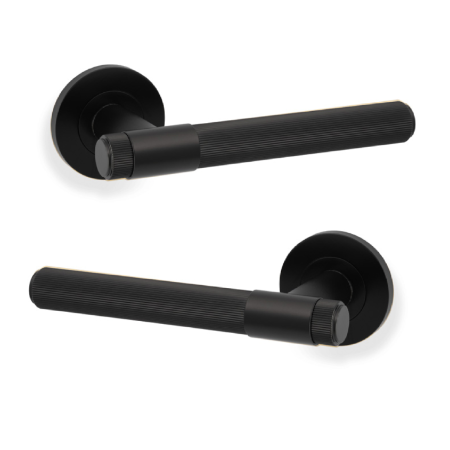
Door handles are touched dozens of times daily but rarely noticed until you upgrade them. Replacing outdated or builder-grade hardware with quality handles in a cohesive finish creates immediate visual improvement and better
-
- January 05, 2026
One of the biggest mistakes to avoid in selecting door handles is getting the wrong size. We don’t blame you, though - door handle sizing seems straightforward until you're actually trying to choose hardware and discover there are multiple measurements to consider, terminology you're unfamiliar with, and compatibility issues you didn't anticipate. The wrong size doesn't just look odd - it can make doors difficult to operate, require modifications to your door, or simply not fit the existing holes and mechanisms.
Getting sizes right the first time means understanding what measurements matter, how they're expressed, and what's standard versus what requires custom preparation. It prevents the frustration of ordering handles that arrive and don't fit, or look disproportionate once installed.
Key Measurements Explained
Backset Measurement
Backset is the distance from the edge of the door to the centre of the handle spindle hole - essentially how far the handle sits from the door edge. This is