




Best Materials for Door Handles for Style and Durability

The material a door handle is made from determines almost everything else about it: how it feels in the hand, how it ages over years of use, how it photographs in a finished room, and whether you will still want it on your door in 2040.
Most homeowners choose handles based on appearance and discover the material implications later. The reverse approach makes more sense, since material decisions you make now show up daily for the next few decades.
What follows is a working guide to the materials that actually matter, what each does well, and where each falls short.
What Are The Main Materials Used For Door Handles?
Five materials cover almost all quality handles on the market: solid brass, stainless steel, bronze, aluminium, and zinc alloy. Each has structural and aesthetic properties that suit it to specific applications.
Solid Brass
The traditional choice for British residential hardware and the benchmark by which others are measured. It is dense, dimensionally stable, naturally corrosion-resistant, and accepts a wider range of finishes than any other metal used in hardware.
Stainless Steel
Offers a more contemporary look, excellent corrosion resistance, and high strength. The grade matters considerably: 304 stainless is appropriate for interior use, 316 marine-grade for exterior or coastal applications.
Bronze
Denser and warmer-coloured than brass, develops a distinctive patina over time, and is generally more expensive. It is the material of choice for heritage restoration and high-end specifications where the natural ageing is part of the appeal.
Aluminium
Light, takes anodised finishes well, and significantly cheaper than the alloys above. It is structurally weaker than brass or steel and shows wear more readily, which limits it to lighter-duty applications.
Zinc Alloy
Sometimes called Zamak or pot metal. The cheap option used in budget handles, die-cast easily into complex shapes, accepts plating, and costs a fraction of brass or steel. It is also brittle, prone to corrosion at stress points, and rarely lasts more than a decade in regular use.
Why Is Solid Brass Considered The Best?
Density. A solid brass handle weighs roughly twice as much as an equivalent zinc one, and that weight is doing structural work.
The internal mechanism can be machined to tighter tolerances, the spindle hole resists wear over millions of cycles, and the lever itself does not flex under load.
Genuine Corrosion Resistance
Brass is corrosion-resistant rather than relying on plating. A scratch on a brass handle reveals more brass underneath. A scratch on a zinc handle plated to look like brass reveals the cheap base metal, which then corrodes outward from the damage point.
Finish Flexibility
Brass takes polished, satin, antique, lacquered, unlacquered, and patinated treatments equally well. Stainless and aluminium are limited to a much narrower range of looks.
The Cost Trade-Off
The downside is cost. A quality solid brass handle costs three to five times what a budget zinc one does, sometimes more. The buying decision is between paying once for hardware that lasts decades or paying repeatedly for hardware that does not.
If you want to verify what you are buying, how to identify solid brass door handles covers the practical tests, since the visual difference between solid brass and brass-plated zinc can be impossible to spot in product photography.
When Should You Choose Stainless Steel Instead?
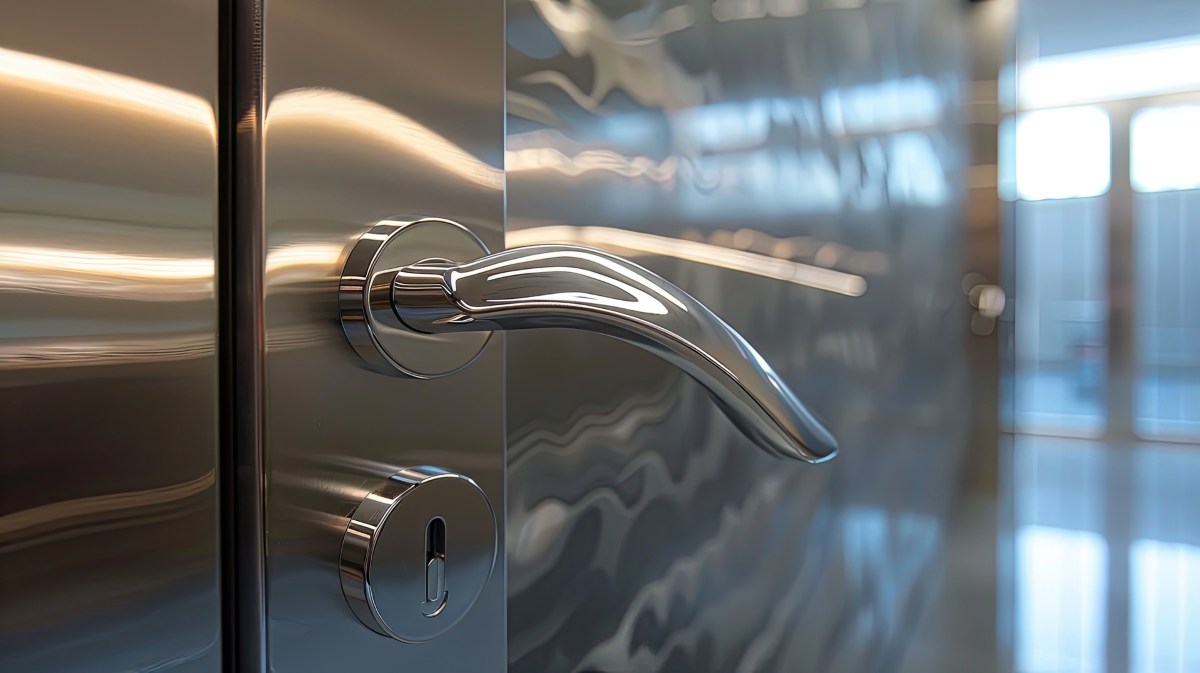
Stainless steel suits contemporary architectural styles where the warmer tones of brass would feel wrong. A glass-and-concrete extension, a minimalist kitchen, an industrial-influenced flat: stainless reads as the right material in these contexts in a way that brass does not.
Performance In Harsh Environments
Stainless outperforms brass in genuinely harsh environments. Coastal properties, swimming pool buildings, kitchens with heavy use, and any space where the hardware will face frequent contact with chlorides or moisture benefit from 316-grade stainless construction. Brass tarnishes in salt air; stainless does not.
Aesthetic Limitations
The aesthetic range is narrower than brass. You essentially have polished, brushed, and satin finishes, plus PVD-coated options in black or bronze tones. Within those limits the look is genuinely distinctive, but if you are after a warmer or more decorative aesthetic, stainless will not deliver it.
Quality stainless costs roughly the same as quality brass. The decision between them is almost always aesthetic rather than budgetary.
What About Bronze And Aluminium?
Bronze For Heritage And Aged Aesthetics
Bronze is a specialist choice. It costs more than brass, has a narrower range of finishes (typically supplied either polished or already aged), and develops its character through use.
The patina that forms over years of skin contact and atmospheric exposure is the point of bronze; if you want hardware that looks identical in 2040 to the day you fitted it, bronze is the wrong choice.
Heritage properties, period restorations, and homes where the architecture itself has visible age all benefit from bronze. Modern interiors rarely do.
Aluminium As A Budget Option
Aluminium fills a different niche. Anodised aluminium handles cost less than brass or steel, weigh almost nothing, and suit applications where weight or budget matters more than longevity. Office partition doors, internal doors in rental properties, and lightweight cabinet hardware are typical use cases.
The structural compromise is real. Aluminium fatigues faster than brass or steel, the anodised finish wears through with extended grip contact, and the internal mechanisms are typically less durable. For a primary residence's main living spaces, aluminium is rarely the right answer.
What Should You Avoid?
Die-cast zinc handles, despite their dominance of the budget end of the market, are the material to avoid wherever possible. The combination of brittle base metal, thin plating, and minimal internal engineering produces hardware that fails in predictable ways: cracked spindle holes, worn-through plating, broken springs, lever droop.
The Plating Problem
The plating on zinc handles is the giveaway. Look at any cheap handle that has been on a kitchen door for five years and you will see wear marks where thumbs rest on the lever, with the underlying metal showing through.
The same wear pattern on a solid brass handle reveals more brass; on zinc it reveals the structural problem.
Painted Finishes
Painted finishes on any base metal are worth treating with caution. Powder coating is durable; spray paint over chrome plating is not.
If a handle's striking colour is achieved through paint rather than through the base material itself or through proper PVD coating, expect chips and wear within a few years.
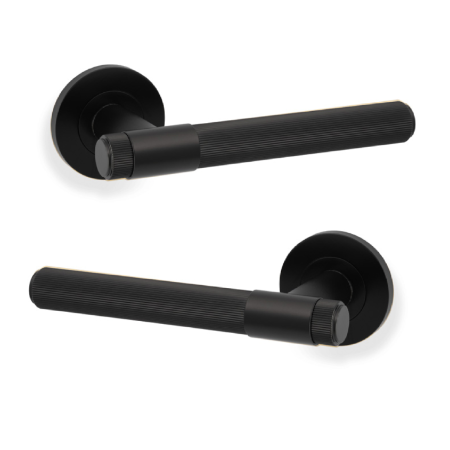
For hardware that combines contemporary aesthetics with proper material quality, our Brass Works matte black handle designs use solid brass as the base metal with PVD-applied finishes that wear in rather than wearing off, which addresses the durability problem most black handles on the market suffer from. The right material on day one solves problems you would otherwise be working around for decades.