




How to Tell If a Door Handle Is Solid Brass

Brass door handles command premium prices for good reason - solid brass is durable, develops attractive patina over time, and maintains its structural integrity for decades. But not every brass-coloured handle is actually solid brass. Brass-plated zinc alloy, brass-finished steel, and even painted finishes that mimic brass appearance are common, often sold at prices that make buyers believe they're getting solid brass when they're not.
If you're investing in what you think is solid brass hardware, knowing how to verify what you're actually buying protects you from overpaying for inferior materials. Whether you're assessing handles before purchase or evaluating antique hardware you've inherited or found, several tests reveal whether you're dealing with genuine solid brass or something else entirely.
The Magnet Test
How It Works
Solid brass is non-magnetic. If you hold a magnet to a solid brass handle, it won't stick. This happens because brass is an alloy of copper and zinc, neither of which are magnetic metals.
Many handles that appear to be brass are actually brass-plated steel or iron. These base metals are magnetic, so even though the brass plating creates a brass appearance, a magnet will stick to the handle underneath.
Performing the Test
Use a reasonably strong magnet - fridge magnets work but aren't ideal because they're quite weak. A small neodymium magnet or any decent workshop magnet provides clearer results.
Hold the magnet against different parts of the handle - the lever, backplate, and any other components. If it sticks anywhere, the handle isn't solid brass. It might be brass-plated over magnetic metal, but the core material is something other than brass.
Test Limitations
The magnet test isn't foolproof. Brass-plated zinc alloy won't attract a magnet because zinc isn't magnetic either, so you'll get a false positive suggesting solid brass when you're actually dealing with plated zinc. However, the test does conclusively identify brass-plated steel or iron, which represents a significant portion of fake brass handles.
Weight and Density
Brass Is Heavy
Solid brass is significantly heavier than zinc alloy, aluminium, or hollow construction. A solid brass lever handle has substantial heft that you notice immediately when you pick it up. Lighter handles suggest either hollow construction or less dense base materials.
This isn't a precise test unless you can weigh the handle and calculate density, but experientially, solid brass handles feel noticeably heavier than alternatives. If a handle feels surprisingly light for its size, it's probably not solid brass.
Comparing Similar Handles
If you're in a showroom or can compare multiple handles of similar size and design, weight comparison becomes more useful. Pick up several handles of the same approximate dimensions. Solid brass ones will be noticeably heavier than brass-plated alternatives.
This comparative approach works better than trying to judge absolute weight, where you might not have enough experience to know whether a handle's weight is appropriate for solid brass.
Visual Inspection of Edges and Wear
Examining Cut Edges
Look at areas where the metal has been cut, drilled, or machined during manufacturing - screw holes, the spindle hole, edges where components were shaped. On solid brass, these areas show brass throughout the material's depth.
On plated handles, you'll see the base metal at cut edges - often a different colour showing through. Grey steel, white zinc alloy, or other base metals become visible where plating doesn't cover or has worn through during manufacturing processes.
Wear Patterns
Handles that have been in use for some time show wear in high-contact areas - where hands grip most frequently. On solid brass, worn areas simply show polished brass underneath any patina or finish that's developed. The underlying metal is the same as the surface.
On plated handles, heavy wear eventually wears through the plating layer, revealing the base metal underneath. If you see different coloured metal showing through in worn spots, you're looking at plated hardware, not solid brass.
The Scratch Test
Performing a Careful Scratch
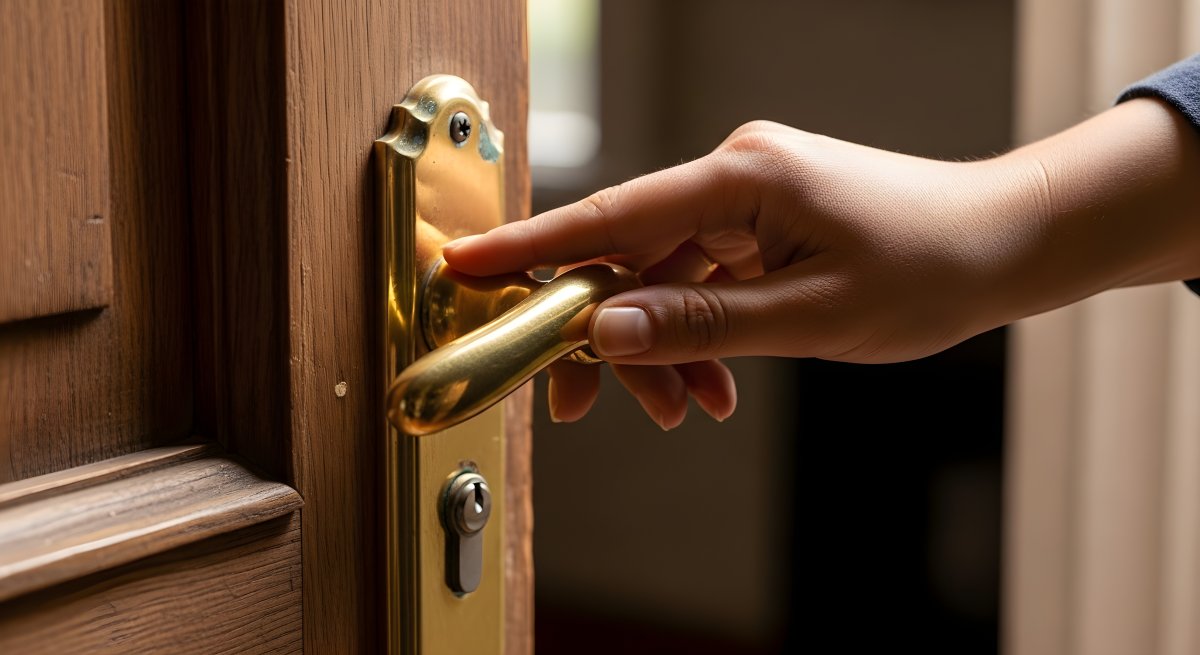
In an inconspicuous area - the underside of a lever, back of a backplate, somewhere not visible during normal use - make a small scratch with a sharp implement. You're not trying to damage the handle, just create a tiny mark that reveals what's beneath the surface.
On solid brass, the scratch reveals brass underneath - the same colour and material as the surface. On plated handles, you'll see the base metal through the scratch - a different colour indicating the brass is only surface-deep.
Test Limitations
This test requires making a mark on the handle, which obviously isn't ideal if you don't own it yet or want to preserve its pristine condition. It's most useful for handles you already own or antique pieces where you're trying to determine value and authenticity.
Modern lacquered brass might show the lacquer layer in a scratch test without indicating anything about the underlying metal. You're testing the metal itself, not just the finish.
P.S. - you can also take a look at our guide on comparing lacquered and unlacquered brass over on our blog.
Sound Test
The Ring of Solid Brass
Tap solid brass lightly with something metal - a coin, another piece of brass, a small tool. Solid brass produces a clear, resonant ring that sustains briefly before fading. It's a characteristic sound that experienced metalworkers recognise immediately.
Hollow brass or brass-plated items over lightweight cores produce a duller, flatter sound without the same resonance. The difference is subtle if you're not familiar with it, but comparing known solid brass against suspected plated items makes the distinction clearer.
Practical Application
This test works better when you can compare sounds from multiple items. Tap several handles - if some ring clearly and others sound flat and dead, the resonant ones are more likely solid brass whilst the dull-sounding ones suggest plated or hollow construction.
Checking Manufacturer Information
What Quality Manufacturers Disclose
Reputable manufacturers clearly state material composition. Product descriptions should explicitly say "solid brass" if that's what you're buying. Vague terms like "brass finish" or "brass effect" typically indicate brass plating or coating rather than solid brass construction.
If the manufacturer doesn't specify material composition or uses ambiguous language, that's often a red flag. Solid brass is a selling point - manufacturers who use it say so clearly.
Understanding Material Grades
Some manufacturers specify brass grades - CZ132, CW614N, or similar designations. These indicate specific brass alloys meeting certain standards. Handles marked with brass alloy specifications are almost certainly solid brass - manufacturers wouldn't bother specifying alloy grades for plated products.
Price as an Indicator
What Solid Brass Costs
Solid brass handles cost significantly more than plated alternatives. If you're seeing "brass" handles at prices that seem surprisingly low, you're almost certainly looking at brass-plated items or brass finishes over other materials.
This isn't foolproof - some retailers overcharge for plated products marketed deceptively. But legitimate solid brass from quality manufacturers commands premium prices that reflect the material cost and manufacturing quality.
Too Good to Be True
If prices seem suspiciously low for claimed solid brass construction, investigate further using the physical tests described above. Budget pricing and solid brass construction rarely go together.
Why It Matters
Understanding the difference between solid brass and alternatives isn't just about authenticity - it affects longevity, appearance over time, and value. Solid brass develops a natural patina, maintains structural integrity for decades, and can be refinished if damaged or if you want to change the finish.
At Brass Works, our heritage-style door handles are manufactured from solid brass, which we state clearly in product specifications. We don't use ambiguous terms or vague descriptions - if it's solid brass, we say so explicitly, providing the transparency that allows informed purchasing decisions.
Knowing how to verify solid brass construction protects you from overpaying for plated alternatives whilst ensuring you get the quality, durability, and authentic material you're investing in.