




7 Different Types of Door Locks

Door locks serve one fundamental purpose: - preventing unauthorised entry - but the mechanisms that achieve this vary considerably. Different lock types offer different security levels, suit different door types, and provide varying balances between convenience and protection. Understanding what's available helps you choose locks appropriate for your security needs rather than just accepting whatever came with your doors.
The right lock depends on where you're using it, what you're protecting, and what level of security you need. Front doors require different locks than internal bedroom doors. Rental properties have different needs than owner-occupied homes. High-crime areas justify different security investments than quiet rural locations.
Here's what's available and where each type works best.
Cylinder Rim Locks (Night Latches)
How They Work
Cylinder rim locks, commonly called night latches or Yale locks (after the most recognised brand), mount on the inside surface of the door rather than mortising into the door edge. They feature a cylinder on the outside operated by key, and a catch on the inside that can be operated by hand or locked with a small snob.
The latch automatically locks when the door closes, providing instant security without needing to turn a key. This convenience makes them popular on front doors where you want the door to lock automatically as you leave.
Security Considerations
Installing night latches is one of many ways to improve home security, but they do come with limitations. They're vulnerable to certain attack methods - slipping a credit card between door and frame can defeat basic models, and the surface mounting makes them easier to force than mortice locks.
Modern night latches include anti-slip features and reinforced construction addressing these vulnerabilities. Higher-security versions offer significant protection, but basic models shouldn't be your only security on vulnerable doors.
Best Applications
Night latches work well as supplementary security on front doors alongside mortice locks, providing convenient automatic locking whilst the mortice lock provides serious security. They're also suitable for low-security internal doors where automatic latching is convenient.
Mortice Deadlocks
Construction and Operation
Mortice deadlocks fit inside a pocket (mortice) cut into the door edge rather than mounting on the surface. They feature a bolt that extends into the door frame when locked, operated entirely by key from both sides with no handle or knob.
This construction makes them highly secure - there's no external hardware to attack except the keyhole, and the bolt sits deep inside both the door and frame making it difficult to force. Quality mortice deadlocks meet British Standard BS3621, which many insurance companies require for external doors.
Five-Lever vs Three-Lever
Mortice deadlocks come in different security levels. Five-lever locks offer high security meeting insurance requirements and providing good resistance to picking and forcing. Three-lever locks provide basic security suitable for internal doors but inadequate for external doors requiring serious protection.
The "lever" count refers to internal mechanisms - more levers mean more complexity and greater difficulty picking the lock. For external doors, five-lever deadlocks meeting BS3621 are standard.
Installation Requirements
Mortice locks require substantial door thickness to accommodate the lock body - typically 44mm minimum. Thin doors or hollow-core doors can't accommodate mortice locks properly, limiting their use to solid external doors and quality internal doors.
Professional installation is advisable unless you're confident about cutting the mortice pocket accurately. Poorly fitted mortice locks compromise both security and door integrity.
Mortice Sashlocks
Combining Latch and Lock
Sashlocks combine a spring latch (operated by handles) with a deadbolt (operated by key). This combination provides convenient day-to-day operation through the handles whilst offering security through the lockable deadbolt.
The latch allows the door to close and stay shut without locking - useful for doors you open and close frequently but want to secure at night or when leaving. The key-operated deadbolt provides the actual security when needed.
Common Applications
Sashlocks are common on back doors, internal doors requiring occasional security (home offices, bedrooms in shared houses), and doors where you want both convenience and security without installing separate latch and lock mechanisms.
They're also used on front doors, though many people prefer combining a separate mortice deadlock with a night latch for greater flexibility.
Euro Cylinder Locks

Modern uPVC Door Standard
Euro cylinder locks are the standard mechanism on uPVC doors and many modern composite doors. The lock uses a replaceable cylinder that can be changed without replacing the entire mechanism - useful for changing locks when moving house or if keys are lost.
The cylinder sits in a lock body with multiple locking points - when you lift the handle and turn the key, bolts engage at several points along the door edge, providing extensive security across the door's height.
Security Vulnerabilities and Solutions
Standard euro cylinders proved vulnerable to snapping attacks where force applied to the protruding cylinder breaks it, allowing access to the locking mechanism. This led to development of anti-snap cylinders with reinforced construction and deliberate breaking points that leave the locking mechanism secure even if the cylinder breaks.
Modern euro cylinders also include anti-drill, anti-pick, and anti-bump features addressing various attack methods. When replacing euro cylinders, choosing high-security versions with these protections is essential on external doors.
Measuring for Replacement
Euro cylinders are measured from the centre screw hole to each end. Common sizes are 30/30, 35/35, or 40/40 (both sides equal length) and various offset measurements like 30/40 or 35/45.
Measuring accurately before ordering ensures the replacement cylinder fits properly without protruding excessively or sitting too far inside.
Multipoint Locking Systems
Comprehensive Door Security
Multipoint locks engage at three or more points along the door edge simultaneously - typically top, middle, and bottom bolts all activated by lifting the handle and turning the key once. This distributes security across the door's height rather than concentrating it at handle level.
These systems are standard on modern uPVC and composite doors, providing security that makes forcing the door open extremely difficult. Even if one locking point is attacked, the others maintain security.
Operation Requirements
Multipoint locks require lifting the door handle before the key will turn - this engages the bolts into position ready for locking. Attempting to lock without lifting the handle doesn't work, which confuses people unfamiliar with the system.
The handle lift requirement means if the mechanism fails, you might struggle to lock or unlock the door. Regular maintenance and lubrication prevent most problems, but mechanism replacement requires professional assistance.
Tubular Latches (Internal Doors)
Simple Closure Mechanism
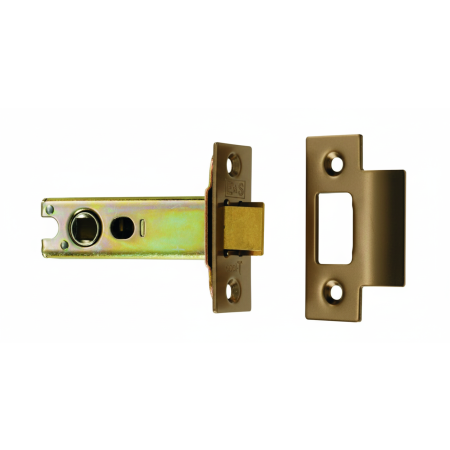
Tubular latches aren't locks at all - they're spring-loaded bolts that keep doors closed without providing security. They're operated by handles on both sides and don't include any key-operated locking mechanism.
These suit internal doors where privacy isn't needed - hallways, living rooms, dining rooms. The door stays closed but can be opened from either side by anyone.
Installation Simplicity
Tubular latches are simpler to install than locks because they don't require key cylinders or complex mechanisms. They're available in various backset sizes (typically 63mm or 76mm) to suit different door thicknesses and handle positions.
For doors requiring privacy rather than security, bathroom locks and privacy bolts provide simple locking without the complexity of keyed mechanisms.
Smart Locks and Digital Options
Modern Alternatives
Smart locks use electronic mechanisms instead of traditional keys - PIN codes, fingerprint readers, smartphone apps, or key cards. They provide convenient keyless entry, allow temporary access codes for guests or tradespeople, and can integrate with home automation systems.
Security varies considerably between products. Quality smart locks meeting security standards provide good protection whilst adding convenience. Budget options might sacrifice security for features.
Power and Backup Considerations
Smart locks require power - usually batteries that need periodic replacement. Most include physical key backup allowing entry if batteries die or electronics fail. Without this backup, a dead battery could lock you out.
Installation ranges from simple (replacing existing cylinder with smart version) to complex (complete lock replacement requiring professional fitting). Consider professional installation for expensive smart locks to ensure proper fitting and operation.
Choosing Appropriate Locks
Understanding security needs, door type, and usage patterns determines which locks suit your situation. External doors in urban areas justify investment in high-security mortice deadlocks or quality multipoint systems. Internal doors need only basic privacy locks or latches.
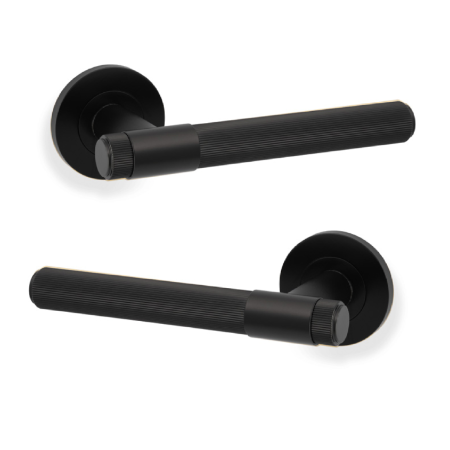
At Brass Works, we provide door handles with built-in locking features compatible with various lock types, ensuring your hardware works together whilst meeting both security and aesthetic requirements.
The right locks balance security, convenience, and cost appropriately for each door's specific requirements rather than applying the same solution everywhere regardless of actual needs.