




What is the Correct Height for a Door Handle?

Door handle height affects both functionality and accessibility more than most people realise. Install handles too high and shorter household members or those with mobility issues struggle to reach them comfortably. Too low and taller people find themselves bending awkwardly. Get it wrong and you're stuck with poorly positioned hardware that's either impractical to relocate or requires living with the inconvenience.
Fortunately, there are established standards for handle height that balance accessibility, ergonomics, and building regulations. Understanding these guidelines ensures your door handles sit at heights that work for the widest range of users whilst meeting regulatory requirements where applicable.
UK Building Regulations Standards
Approved Document M Requirements
In the UK, Approved Document M (Access to and Use of Buildings) specifies handle heights for accessibility. For new builds and certain renovations, door handles and controls must be positioned between 900mm and 1000mm from finished floor level.
This range ensures handles are accessible to wheelchair users whilst remaining comfortable for standing adults. The 900-1000mm specification applies to door handles, window controls, light switches, and other operating mechanisms throughout accessible buildings.
Not all residential properties fall under these requirements - many existing homes aren't subject to Approved Document M unless undergoing substantial renovation. However, the specified heights represent good practice regardless of regulatory obligations.
When Regulations Apply
New residential construction, particularly accessible housing or properties designed for adaptable use, must comply with Approved Document M requirements. Commercial buildings, public spaces, and rental properties also face accessibility requirements affecting handle height.
Even when not strictly required, following these guidelines benefits anyone who might use the property - from children to elderly residents, wheelchair users to people carrying items who need to operate doors with their elbows.
Standard Residential Heights
The Traditional 1067mm (42 inches)
Historically, door handles in UK homes were typically installed at 1067mm (42 inches) from the floor. This height became standard through convention rather than regulation, representing a comfortable reach height for average-height adults.
Many older properties still have handles at this height, and it remains common in residential installations not subject to accessibility requirements. It works adequately for most able-bodied users, though it sits higher than current accessibility guidelines recommend.
The Modern 900-1000mm Standard
Current best practice, influenced by Approved Document M, typically places handles at 900-1000mm. Within this range, 1000mm (about 39 inches) has become a common choice - it's at the upper end of the accessible range whilst still feeling natural for standing users.
This height accommodates wheelchair users comfortably whilst not requiring significant adjustment for people accustomed to traditional heights. The difference between 1000mm and 1067mm is noticeable but not dramatic.
Variations for Different Door Types
Entrance and External Doors
Front doors and main entrance doors often use the standard residential height - typically around 1000-1067mm depending on when the property was built and whether accessibility was a design consideration.
Some people prefer entrance handles slightly higher for aesthetic reasons, feeling that the traditional 1067mm creates better proportions on tall entrance doors. However, accessibility considerations should take priority if the property needs to accommodate wheelchair users or mobility-impaired residents.
Internal Doors
Internal doors typically follow the same height as entrance doors for visual consistency. Having handles at varying heights throughout a property looks odd and creates no functional benefit.
Bathroom and bedroom privacy locks sit at the same height as passage handles on other internal doors. Consistency matters more than optimising each individual door.
Cupboard and Utility Doors
Smaller doors - cupboards, utility rooms, storage areas - sometimes benefit from slightly lower handles if the door is unusually short. A 2-metre tall door with a handle at 1000mm looks balanced. A 1.5-metre tall cupboard door with the handle at the same height looks top-heavy.
For these applications, positioning the handle approximately two-thirds up the door often creates better proportions whilst remaining easily reachable.
Accessibility Considerations

Wheelchair User Requirements
For wheelchair users, handle height is critical. Handles positioned too high require uncomfortable reaching or become completely inaccessible. The 900-1000mm range specified in Approved Document M reflects research into comfortable reach heights from seated positions.
Beyond height, the type of handle matters for accessibility. Lever handles require less grip strength and dexterity than knobs. D-pulls on sliding doors provide easier operation than recessed handles requiring finger grip.
Children and Shorter Adults
Whilst accessibility guidelines focus primarily on wheelchair access, the 900-1000mm range also benefits children and shorter adults. Handles at traditional 1067mm height require children to reach upward uncomfortably or require assistance.
Lower handles allow independent operation for younger children whilst still being perfectly comfortable for adults. This matters particularly in family homes where children's independence and safety both benefit from appropriately positioned hardware.
Elderly and Mobility-Impaired Users
Older adults or those with mobility issues benefit from lower handle heights combined with lever-style hardware. Arthritis, reduced grip strength, and limited reach all make lower, easier-to-operate handles valuable.
For properties being adapted for aging-in-place or accessible living, reviewing handle heights alongside other modifications - grab rails, ramps, wider doorways - creates comprehensive accessibility.
Practical Installation Considerations
Measuring from Finished Floor Level
Handle height is measured from the finished floor level - that's the actual floor surface you'll walk on, not the subfloor or structural deck. If you're installing handles during renovation before final flooring goes down, you need to account for the floor finish thickness.
Tile, hardwood, carpet - different flooring adds different heights. Installing handles before knowing final floor level can result in handles sitting higher or lower than intended once flooring is complete.
Consistency Across Door Sizes
When installing handles at consistent heights across doors of different sizes, measure from the floor rather than positioning handles at the same proportional point on each door. A handle at 1000mm looks fine on a 2-metre door and a 2.4-metre door. Positioning handles at "halfway up" each door creates varying heights that look inconsistent.
Latch and Lock Compatibility
Handle height must align with your latch or lock mechanism. Standard tubular latches and sashlocks are designed for installation at typical handle heights. If you want handles at unusual heights, ensure compatible latches are available or be prepared for custom installations.
Getting Height Right During Installation
Mark Before Drilling
Measure and mark handle positions carefully before drilling. Drill a test hole at the marked height on scrap material if you're uncertain - seeing the height in practice helps confirm it feels right before committing to drilling your actual door.
Once holes are drilled, relocating handles requires filling and refinishing the door or accepting visible holes. Getting it right first time prevents these problems.
Consider All Users
Think about everyone who'll use the doors regularly. If you have or might have wheelchair users, young children, or elderly residents, prioritising accessibility through appropriate handle heights benefits everyone without creating disadvantages for able-bodied users.
Making the Right Choice
For most residential applications, installing handles at 1000mm provides a sensible balance - it meets accessibility guidelines, works comfortably for users of varying heights and abilities, and aligns with current building practice.
If you're replacing existing handles and find them at 1067mm, there's no requirement to relocate them unless you're undertaking renovations that trigger accessibility requirements or you specifically want improved accessibility.
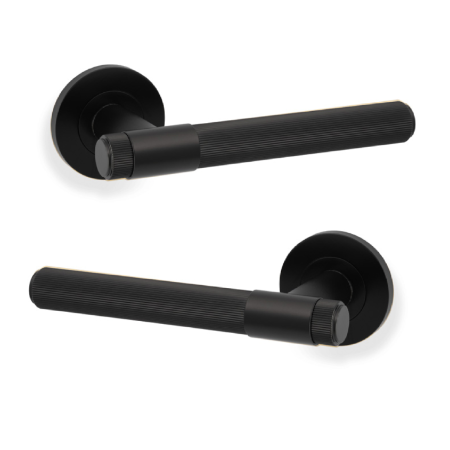
At Brass Works, our matte black hardware for modern doors and other door handle ranges work at any reasonable installation height - the hardware itself doesn't dictate height, your door preparation and accessibility needs do.
Getting handle height right creates better functionality for all users whilst avoiding the problems that come from handles positioned too high or too low for comfortable, accessible operation.