




How to replace a latch and strike plate

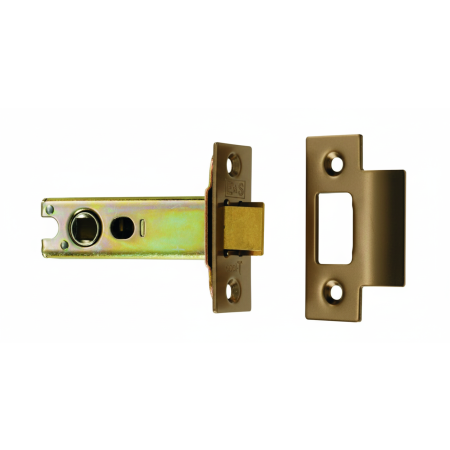
Replacing a door latch and strike plate
Replacing the latch on your door might be needed for a couple of reasons. You might be changing it to match the colour of your new handle, or the old one might have broken. The handle action relies on a spring for connection, and after a lot of usage the connection between the action and the spring has been known to snap, leaving you with a useless handle and a door that won’t open.
For a standard door latch this isn’t too complex, but you should have these tools to hand:
- Ruler or tape measure
- Pencil
- Sharp chisel
- Hammer
- Screwdriver
- Drill
The main issues you are likely to encounter are that the plate which sits around the latch may be bigger than the previous one, and that the mechanism for the latch might not have the hole for the spindle in exactly the same place. If it’s only a few millimetres out, you can use the drill to gently expand the hole. If there’s a large difference, you need to ensure the expansion will be covered by your new handle. If it is too small to cover the size of hole you need, you would be better served by shopping around for a better fit, as it’s very hard to cover a significant hole in a door, and it may also affect the security of the fixing.
The plate surrounding the latch should sit flush with the door, and if that’s not the case, you can place the latch itself into the hole in the door left by the previous mechanism, and draw around it to mark out where the fit isn’t right. Once you know how you need to remove, and where, you can slowly use your chisel to remove the wood that’s in the way, being careful not to remove too much. This is definitely a job that should be done as slowly and methodically as possible, to avoid making a mistake that won’t be easy to correct.
Replacing the strike plate on your door
The strike plate is the piece of metal mounted into your door frame that both helps to push the latch shut when the door is closed and protects the frame from damage. They come in lots of different shapes, sizes and colours, and are likely to need replacing when the rest of the door furniture is updated.
You will need:
- Ruler or tape measure
- Pencil
- Sharp chisel
- Hammer
- Screwdriver
- Drill
- Knife
Depending on the age of your house, it’s possible that your kickplates will have crosshead rather than Phillips head screws, and it’s also possible that they will have been painted into the frame, as the difficulty of removing the flat head screws often leads to a general reluctance to remove the strike plate in homeowners.
If this is the case on the door frame you’re working on, the first task is to scrape as much of the paint away from the head of the screw as possible. This includes not just the cross head slot itself, but from the edge of the screw head itself. You’re likely to need solid purchase to get these screws turning, and if the head strips then the job will become much more difficult.
Once the screws have been removed, you can gently prise the strike plate out of the door frame. Be careful not to take any of the surrounding paint with it - you can use your knife to break the join if this is happening.
Similarly to replacing the latch, there will be an exercise in matching the new strike plate to the existing cutout. Newer strike plates often include a plastic element that can be set into the frame to create a neater appearance. This needs to be set into the frame first, and will need you to enlarge the existing hole using your hammer and chisel, and deepen the area where the strike plate is screwed into the frame. Some strike plates also feature an additional metal tab which will sit in the plastic element. If you choose not to use the plastic element, you will still need to make sure the hole beneath the plate is deep enough to accommodate the tab, if it has one.

Once you’re able to neatly insert the strike plate so it fits flush with the door, it’s time to fix it with screws. If the new holes don’t quite align with the old ones, you may need to fill them and allow them to dry so they’re stable. It’s also good advice to add pilot holes with your drill, to ensure the screws go in straight. If they go off course, the protruding screw head may damage the plate which covers the latch, or even stop your door closing altogether.
While you're updating your strike plate, you'll also want to update your door handle. Head over to our detailed guide on replacing your door handle and find out how.